Eco-Philosophy

“Eco-Philosophy” by John Seed – prepared for the “Ecological Humanities Cafe” held by the Department of Ecological Humanities, Providence University, Taiwan November 18 2011. THE RESPONSE BY PROFESSOR KE OF THE DEPARTMENT OF ECOLOGICAL HUMANITIES IS APPENDED.

I would like to explore questions this afternoon about the human being’s position in nature and different ways of viewing human beings’ relationship with nature.

But first I would like to mention how marvellous and refreshing I find this department with its emphasis on the humanity dimension of ecological thought and practice and the auspicious change of name to the “Department of Ecological Humanities” . As I hope my talk will illustrate, ecology is essentially interdisciplinary and its scientific discoveries have the greatest chance of actually influencing events in the world if the science is integrated within a community of mutually supporting disciplines: as important as ecological science is, I’m afraid that it can only help stop our inexorable slide into oblivion if it is supported within the necessary philosophical, psychological and spiritual context.

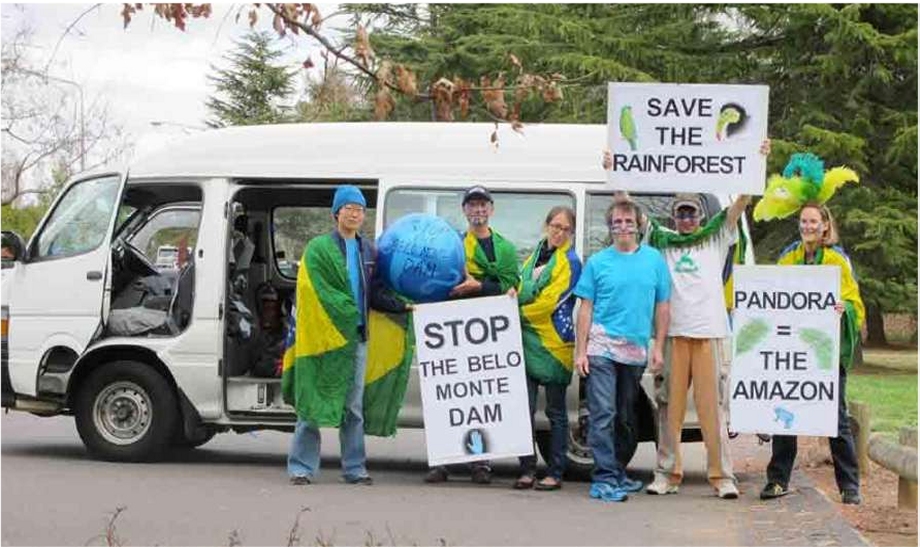
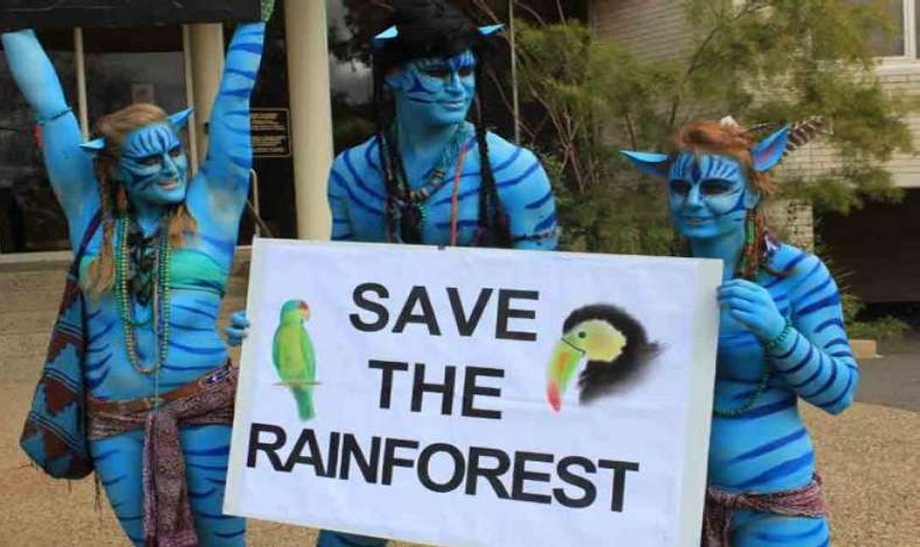
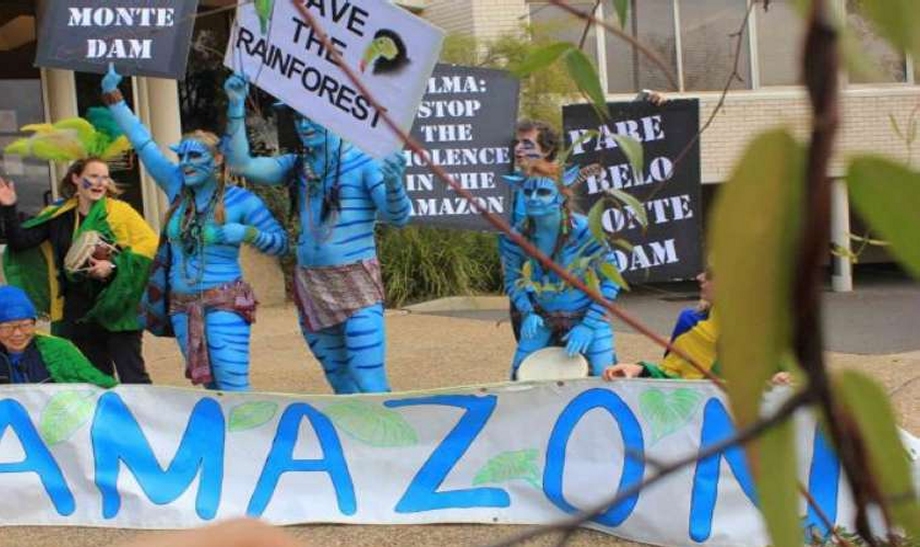
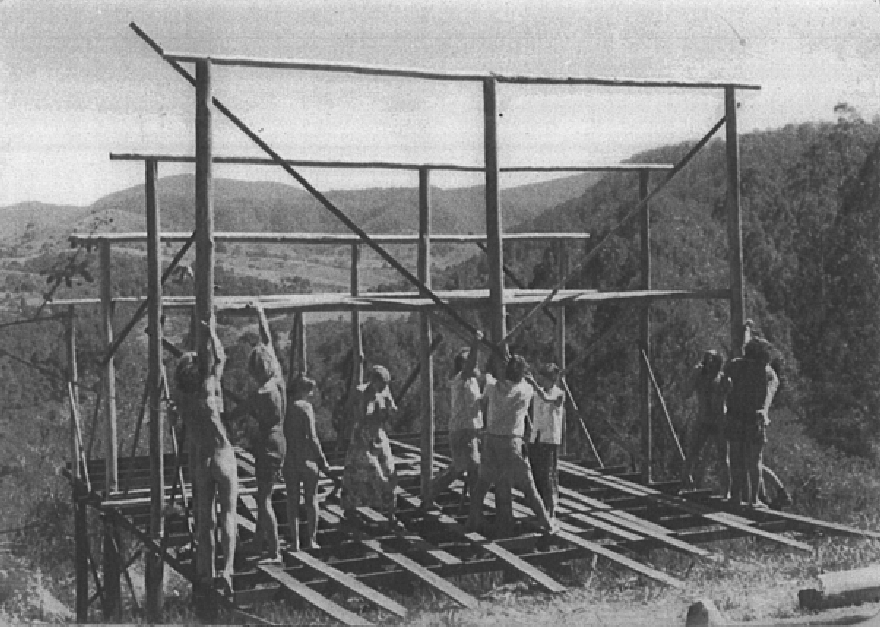
My own interest in eco-philosophy grew out of my environmental activism. Ever since my involvement in the successful struggle to protect the rainforests of my home state of New South Wales (1979-1981) , I have been trying to understand the psychological or spiritual crisis which underlies all of our environmental problems: How can human beings be so stupid as to destroy the biological fabric out of which our own lives also are woven? This is the sort of question which gives rise to eco-philosophy and Australia (where the world’s first Green Party formed in 1972) has long been a hotbed of both environmental activism and eco-philosophy.

In the early ‘80’s I read sociology professor Bill Devall’s “The Deep Ecology Movement” and my interest in eco-philosophy was born.

While a professor at University of Oslo in 1972, Arne Naess, introduced the terms “deep ecology movement” and “ecosophy” into environmental literature.

According to deep ecology, underlying all of the symptoms of the environmental crisis lies anthropocentrism or human-centeredness, the idea that only human beings have intrinsic value and that the rest of nature has only instrumental value, as a mere resource for humans.

My 1984 article “Beyond Anthropocentrism” appeared in the book “Thinking Like a Mountain” which I wrote in 1988 with Arne Naess and others.

“When humans investigate and see through their layers of anthropocentric self-cherishing, a most profound change in consciousness begins to take place. Alienation subsides. The human is no longer an outsider, apart. Your humanness is then recognised as being merely the most recent stage of your existence, and as you stop identifying exclusively with this chapter, you start to get in touch with yourself as mammal, as vertebrate, as a species only recently emerged from the rainforest. As the fog of amnesia disperses, there is a transformation in your relationship to other species, and in your commitment to them. What is described here should not be seen as merely intellectual. The intellect is one entry point to the process outlined, and the easiest one to communicate.

For some people however, this change of perspective follows from actions on behalf of Mother Earth. “I am protecting the rainforest” develops to “I am part of the rainforest protecting myself. I am that part of the rainforest recently emerged into thinking.” What a relief then! The thousands of years of imagined separation are over and we begin to recall our true nature. That is, the change is a spiritual one, thinking like a mountain, sometimes referred to as “deep ecology”. iii

Camped out in Death Valley in 1984, California eco-philosopher George Sessions and Arne Naess drew up the eight basic principles that describe deep ecology:
1. The well-being and flourishing of human and nonhuman life on Earth have value in themselves. These values are independent of the usefulness of the nonhuman world for human purposes.
2. Richness and diversity of life forms contribute to the realisation of these values and are also values in themselves.
3. Humans have no right to reduce this richness and diversity accept to satisfy vital needs.
4. The flourishing of human life and cultures is compatible with a substantial decrease of the human population. The flourishing of nonhuman life demands such a decrease.
5. Present human interference with the nonhuman world is excessive, and the situation is rapidly rapidly worsening.
6. Policies must therefore be changed. These policies affect basic economic, technological, and ideological structures. The resulting state of affairs will be deeply different from the present.
7. The ideological change is mainly in appreciating life quality rather than adhering to to an increasingly higher standard of living. There will be a profound awareness of the difference between big and great.
8. Those who subscribe to the foregoing points have an obligation directly or indirectly to try to implement the necessary change.
The eighth of these principles points to the natural fit between deep ecology and environmental activism and helps explain why deep ecology was so fervently embraced by the most radical US environment group of the ‘80’s and ‘90’s “Earth First!
Paul Ehrlich, arguably the best known of all ecologists, sees deep ecology as the way forward:

“The main hope for changing humanity’s present course may lie … in the development of a world view drawn partly from ecological principles – in the so-called deep ecology movement. The term ‘deep ecology’ was coined in 1972 by Arne Naess of the University of Oslo to contrast with the fight against pollution and resource depletion in developed countries, which he called ’shallow ecology’. The deep ecology movement thinks today’s human thought patterns and social organization are inadequate to deal with the population-resource-environmental crisis – a view with which I tend to agree. Within the movement disagreement abounds, but most of its adherents favour a much less anthropocentric, more egalitarian world, with greater emphasis on empathy and less on scientific rationality.
I am convinced that such a quasi-religious movement, one concerned with the need to change the values that now govern much of human activity, is essential to the persistence of our civilization.”

Physicist and best-selling author Fritjof Capra also sees deep ecology as the way forward:

“The new vision of reality is an ecological vision in a sense which goes far beyond the immediate concerns with environmental protection. To emphasise this deeper meaning of ecology, philosophers and scientists have begun to make a distinction between ‘deep ecology’ and ’shallow environmentalism’. Whereas shallow environmentalism is concerned with more efficient control and management of the natural environment for the benefit of ‘man’, the deep ecology movement recognizes that ecological balance will require profound changes in our perception of the role of human beings in the planetary ecosystem. In short, it will require a new philosophical and religious basis.
Deep ecology is supported by modern science, and in particular by the new systems approach, but it is rooted in a perception of reality that goes beyond the scientific framework to an intuitive awareness of the oneness of all life, the interdependence of its multiple manifestations and its cycles of change and transformation. When the concept of the human spirit is understood in this sense, as the mode of consciousness in which the individual feels connected to the cosmos as a whole, it becomes clear that ecological awareness is truly spiritual. Indeed, the idea of the individual being linked to the cosmos is expressed in the Latin root of the word religion, religare (‘to bind strongly’), as well as the Sanskrit yoga, which means union.”

I’m proud to say that Australia has remained a powerful source of cutting edge eco-philosophical thought –represented by the likes of the late Val Plumwood , Freya Matthews (author of “The Ecological Self”) and Patsy Hallen .

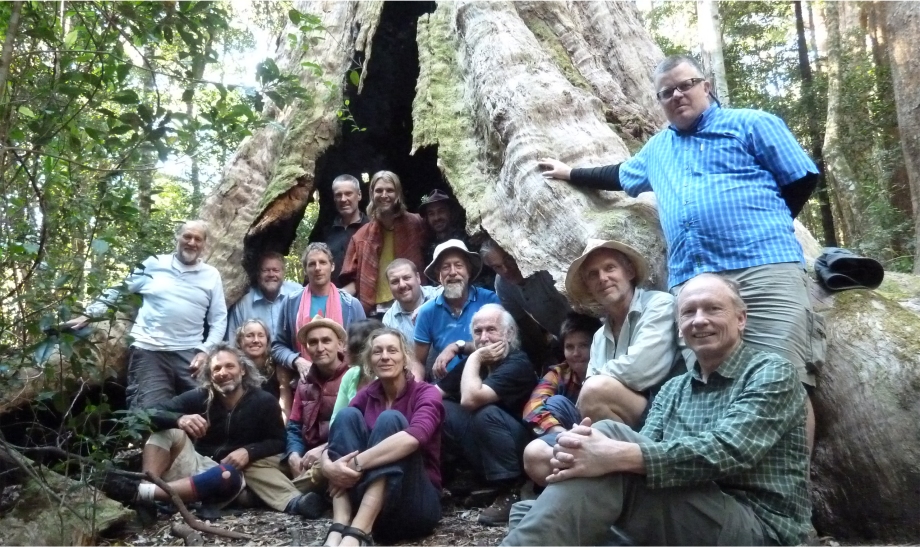
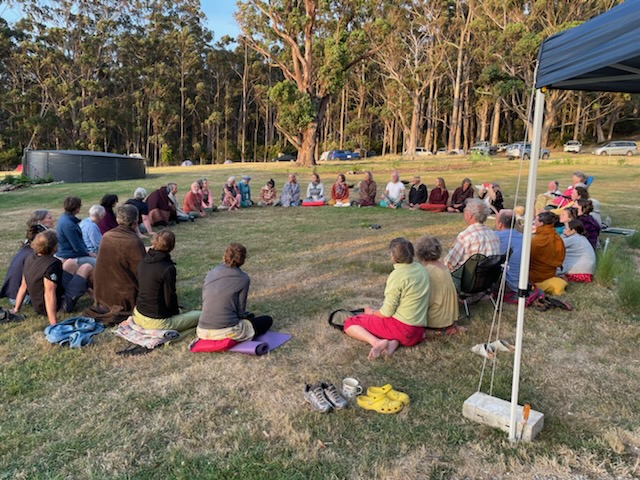
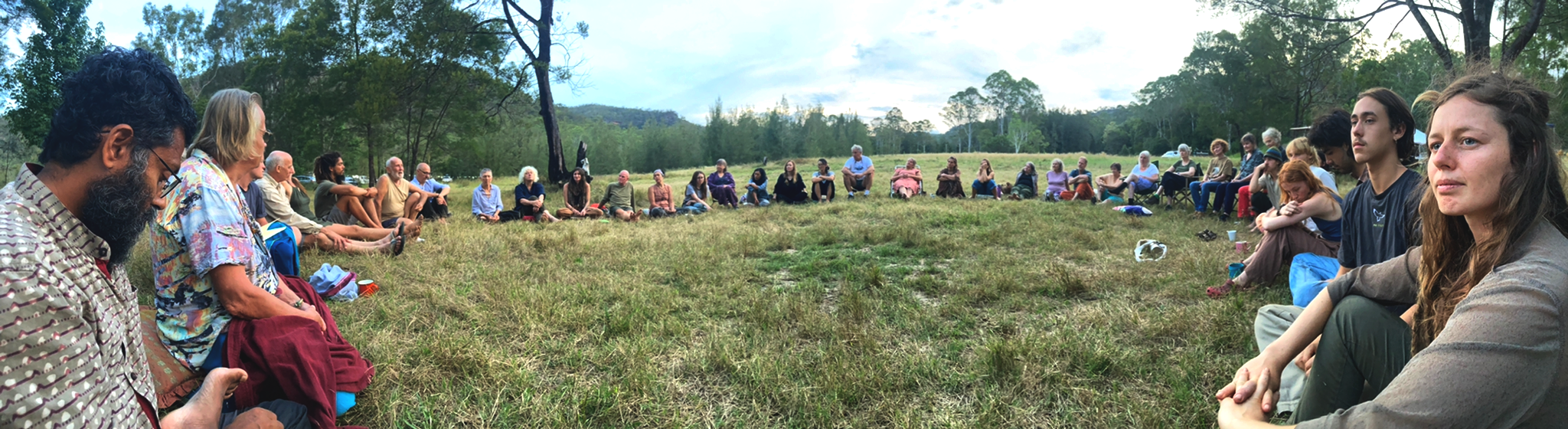
In 1996, together with these three eco-feminist deep ecologists, I started a movement called “Earth Philosophies Australia” which met regularly in forest wilderness in different parts of Australia until Plumwood’s death in 2008.

A radio journalist who participated in one of these events later wrote:

“I entered the forest searching for reconciliation between my former life as an athlete, and my present life as a journalist; between life outside and life indoors; between nature and culture.

I met a man who plays clarinet in a duet with a bird. (You must hear it to believe it!)

I met a woman, death rolled three times by a crocodile, who escaped to reconsider the philosophy of “being prey”.

In the forests of northern NSW, I discovered a philosophy lived through, rather than despite the body.

It’s a story about our confusing relationship with our environment, and about the terror and the extraordinary sensory richness that coexist at the heart of nature.”

The clarinet-bird duet and much more may be heard in the 45-minute radio documentary she produced for ABC Radio National .

You may read more about deep ecology and other eco-philosophies in the Encyclopedia of Earth or in Chris Johnstone’s “What is Deep Ecology”

RESPONSE BY DR. KE OF THE DEPARTMENT OF ECOLOGICAL HUMANITIES:

Response to Dr. John Seed

Immanuel Chih-Ming Ke
Professor of philosophy at Providence University in Taiwan
2011.11.18, Ecological Humanities Café in Providence University

First of all, thanks to John Seed for making a brief lecture for us. I am very happy and feel honored to be invited to response to John Seed’s lecture, but it is because time is limited, I only make some brief responses here.
For me, an environmentalist is full of love and justice. If it were not so, they would not conserve nature so fervently. However, this kind of love is very special: this kind of love transcends self, race, class, species, and even nature, and we cannot find it in earth, oceans, mountains, sky, and wilderness. For me, obviously, this kind of love is transcendental; it transcends nature; it is from “other”. Only this kind of love can overcome all sin, pain, suffering, death in this world, and still persist in loving nature.
In fact, this natural world is full of cruelty, bloodiness, and death. This is not a lovable world. Environmentalists are amazing because their love is inconceivable. Even though in such a world full of sin, pain, hurt, and death, environmentalists still unconditionally love this world and those animals that injure each other. This kind of love is indeed unimaginable and inconceivable. Why do humans have such kind of love? Why does such kind of love exist in this cruel and heartless nature? I don’t think philosophy and rationality are able to tell us the origin of such unconditional love, and, of course, we cannot find its origin in nature. Thus, I can only assume in such a simple way: This love must come from another world, that is, an eternal world. For me, if there were no such eternal and unconditional love, I couldn’t understand why humans should conserve this world.
In fact, humans love nature is unnatural. Natural world is full of bloodiness, killing, contest, pain, and death; what is so-called “food chain” is actually a chain of bloodiness. No one in this chain loves this chain, but humans do. Therefore, the environmentalist who fervently bears in mind the interest of nature and all natural beings must be unnatural.
I have been thinking about a problem: why should humans love the world? In point of the practical perspective, the best reason is: to love the world is to love ourselves. However, we have seen many people who love the world are willing to give up their lives; therefore, I think this self-renunciation love of humans cannot obtain its interpretation through nature, and even through realistic humanity. It should have other roots. It is true that we human being are different from other creatures because we can unconditionally love them.
In sum, I think only the person who really overcomes nature can love nature; a person must renounce self and renounce this world, she can love self and love this world. Consequently, if I must say something about my ecological philosophy, I will use a very simple way to express it, that is: humans should oppose biocentricism, ecocentricism, even naturecentricism, and most importantly humans should radically oppose egocentricism, and even the egocentricism which is pretended by anti-anthropocentricism.
Above-mentioned are my simple responses to John Seed. Thank you!

No comments yet.
No trackbacks yet.